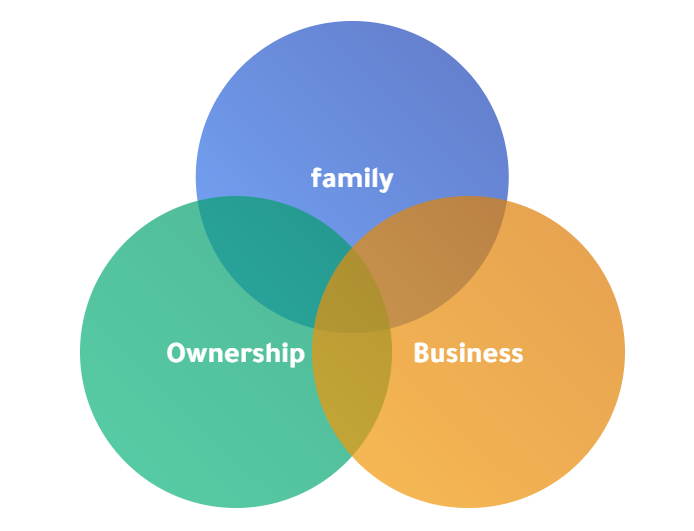
Three-circle model

Three Circles Model - Family, Ownership, Business

Theoretical basis for evaluation

Our framework is based on the three-circle model developed by René Tagiuri and John Davis, which is considered the most widely accepted theoretical foundation in the field of family businesses.

Family circle

It includes all members of the royal family, whether they work for the company or not. It focuses on family values, traditions, and family relationships.

Property Department

It includes all owners of the company, whether family members or outsiders. It focuses on shareholder rights and return on investment.

Business Circle

It includes all employees and management, including family and non-family members. It focuses on operational performance and sustainable growth.

Evaluation methodology

Comprehensive analysis

An in-depth analysis of the ten major departments in the organization, with an assessment of the interaction between the three departments.

Quantitative measurement

Use measurable performance indicators to assess the health of the organization and track progress.

Participatory evaluation

Involve all stakeholders in the evaluation process to ensure comprehensiveness and accuracy.

Steps of the evaluation process

1

Initial assessment

Collect basic data about the organization and define the scope of the evaluation and desired objectives.

2

Management analysis

A detailed assessment of the ten key departments using specialized assessment tools.

3

Leadership Evaluation

Analyzing current and future leadership capabilities, especially for the second generation of leaders.

4

Interaction analysis

Study the interaction between family, ownership, and business circles and their impact on performance.

5

Report preparation

Compile the results into a comprehensive report with recommendations and proposed development plans.

6

Follow-up and development

Develop a follow-up plan to implement recommendations and measure performance progress.

Benefits of implementing the framework

clarity of vision

A deeper understanding of organizational dynamics and the factors influencing performance.

institutional balance

Balancing family, property, and business interests

Improve performance

Increase operational efficiency and profitability through targeted improvements

Sustainability

Ensuring the continuity of the company and its successful transfer to future generations

Original text
Rate this translation
Your feedback will be used to help improve Google Translate